
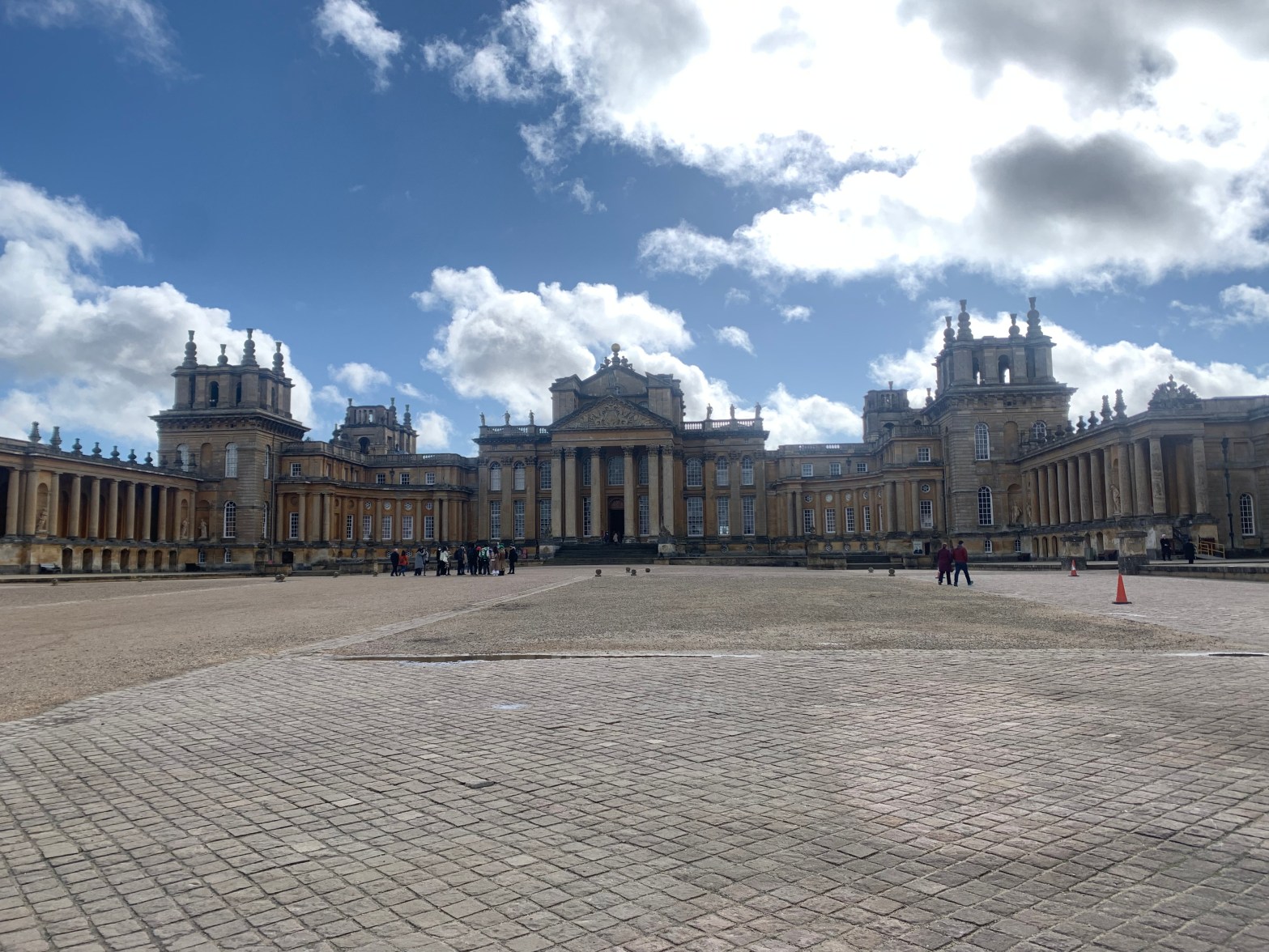
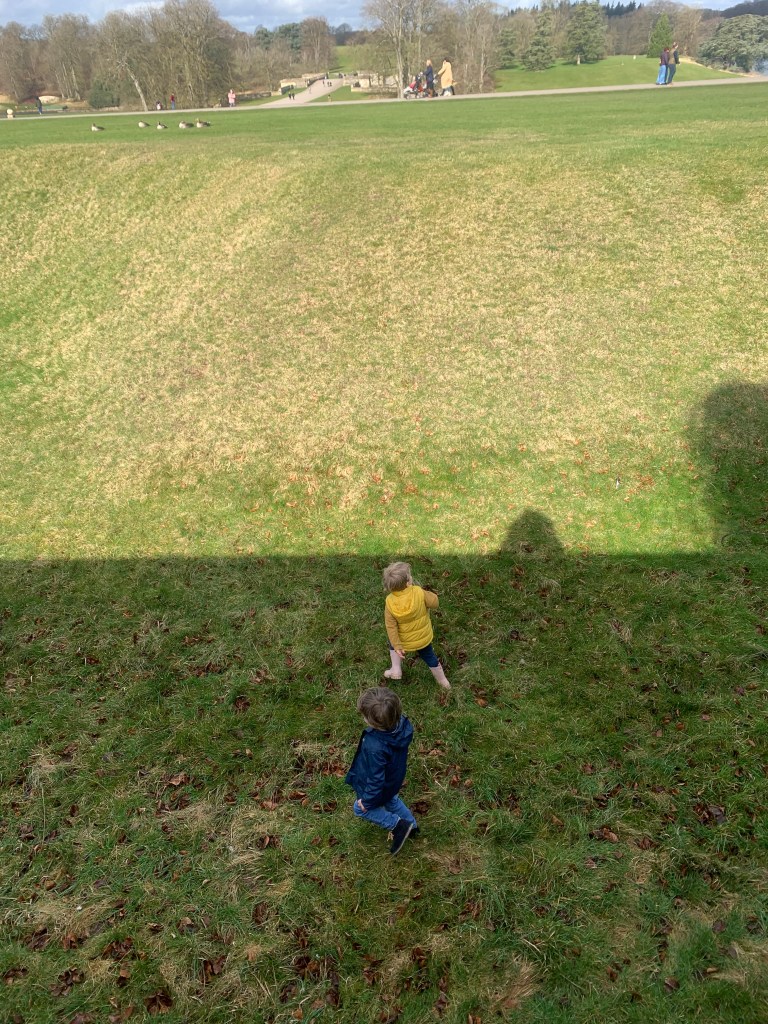
Last Saturday we went to my cousin’s 50th birthday party in Oxfordshire (Happy Birthday, Sophie!) and we decided to spend the whole weekend there. My brother and his wife have two children and my nephew is the same age as Rory – literally, he is two days older – so Henry and I took the two boys to Blenheim Palace for an adventure! We were staying in a beautiful Airbnb about 10 minutes away, so we were in the perfect location for a gentle drive through the Cotswolds! There is a beautiful entrance that leads up to the old coach houses and the side of the palace. It cost £19.50 per adult for tickets to the gardens only, and although that sounds a bit steep, it was definitely worth it as there was so much to see and so much space for the boys to play in. This included a miniature train and an adventure playground! All very exciting.
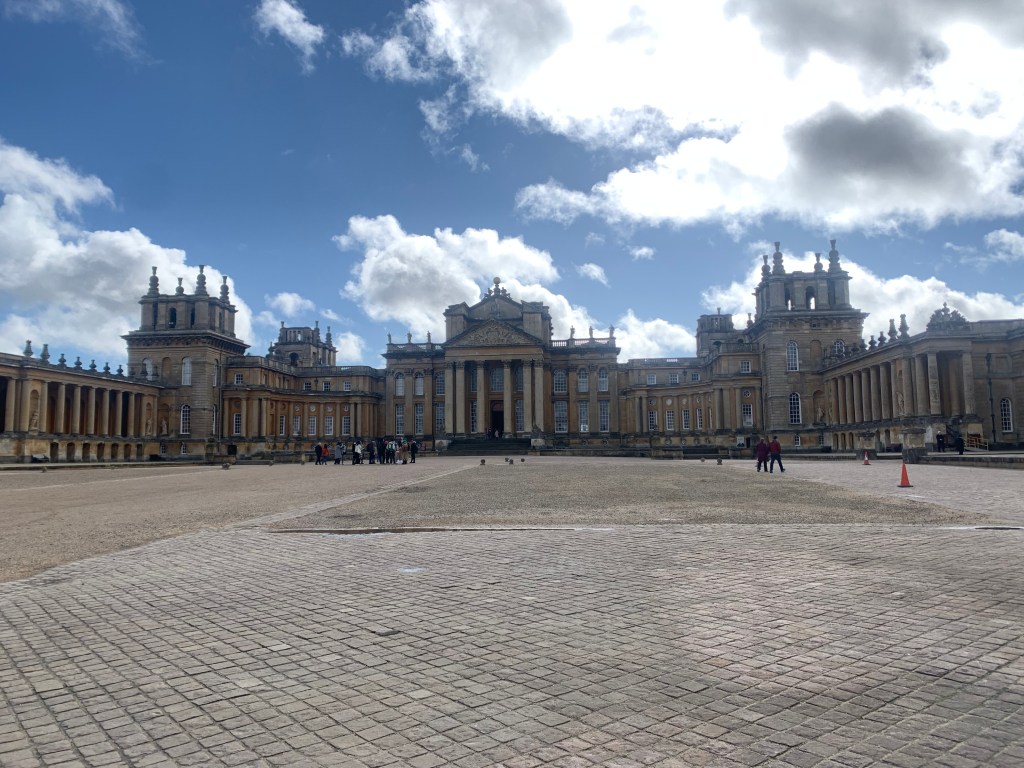
My favourite part of any visit anywhere is the first look at the buildings, and with Blenheim it’s a slow build-up of exquisite architecture. Even as you drive through the main entrance you are faced with the Hensington Gates, added by Nicholas Hawksmoor in 1709. Hawksmoor had recently worked with dramatist Sir John Vanbrugh (a fledgling architect) on the first stages of the flamboyantly Baroque styled Castle Howard in Yorkshire which was one of the first examples of this style in England. The Earl of Marlborough, John Churchill, was rewarded with a new mansion by Queen Anne for his triumphs against the French and Bavarians during the War of the Spanish Succession and because of his many victories he was elevated from Earl to Duke and given land which was named after the Battle of Blenheim. The Queen gave the land to the Duke and his wife and she helped with the build financially which officially started in 1705. The Duchess of Marlborough, Sarah Churchill, was a close friend and confidante of Princess Anne and was appointed the role of Her Majesty’s Mistress of the Robes when Anne became Queen.
Although the palace was being built with some money given by Queen Anne, there were many disputes with payment. The Duke had contributed £60,000 to the initial costs of building. This amount was supplemented by parliament so really the building should have been a monumental house. The country felt that it was them who were fitting the bill which made the Marlboroughs very unpopular and in turn it led to accusations of extravagance and the building’s impractical design. By 1711 £220,000 (which is – at a very rough estimate – about £55,000,000 in today’s money) had been spent and £45,000 was still owed to the workers. The Duchess and the Queen had a very tumultuous relationship and they fell out often. They had one final argument which was never reconciled and funding from the Crown stopped. This forced the Marlboroughs into exile and they did not return to England until the day after the Queen’s death in 1714. Most of the blame for the build-up of debts fell on Vanbrugh and the Duchess did nothing to squash the criticism as she had wanted a different architect to take on the project. Spitefully, the Duchess only made the rumours of Vanbrugh’s relentless grandiose ideas worse and his career never recovered.
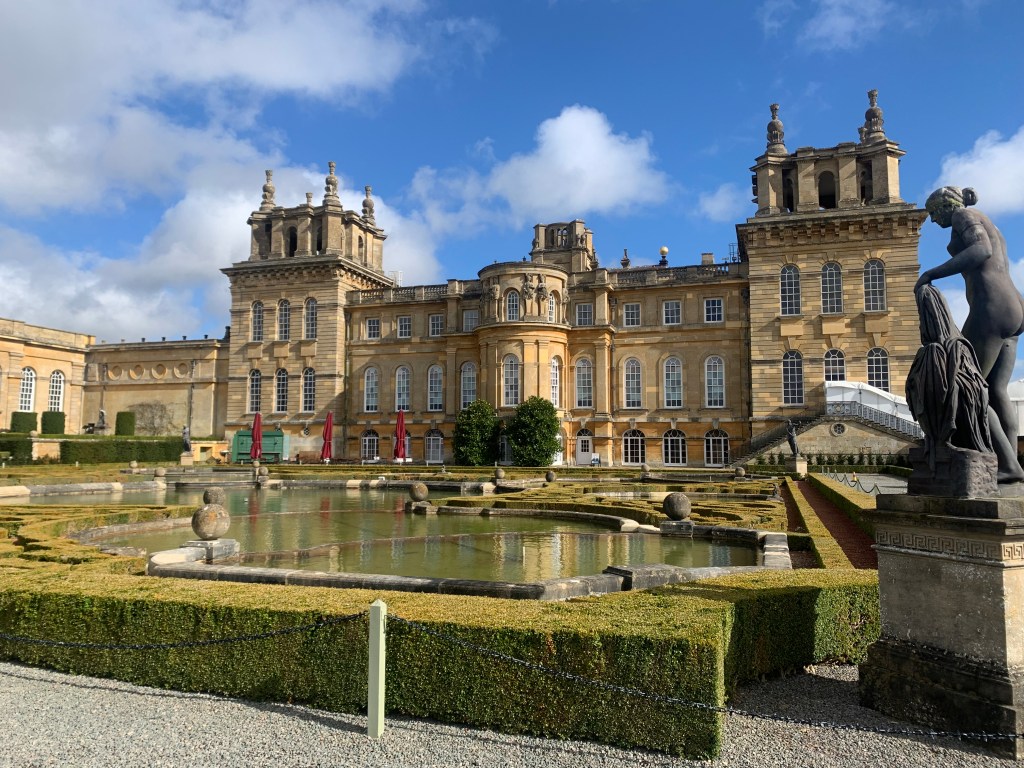
The marvellously flamboyant European Baroque style is rare in Britain, which I think is a shame. The rich, bright colours and the vividly painted ceilings can be stared at for hours. Dramatic central facades, large scale frescoes and the use of plaster or marble finishing and an enormous Grand Bridge with many large hidden rooms within are just a few examples of the opulence of the time. The Winter Palace in St Petersburg and the Palace of Versailles are other wonderful examples of this style. In England, however, it was not as popular and the Palladian style took over with the new Hanoverian influx with King George I’s arrival in 1714. As the palace was built as a monument to the Duke and his military achievements, the building contains many military symbols. One of the most famous symbols can be found on the roof above the south portico, a bust of the Duke’s rival and France’s King Louis XIV. The bust was stolen during a siege operation in Tournai, Belgium in 1709. Vanbrugh designed Blenheim to be best viewed from a distance, and I can confirm that it works beautifully, surrounded by a classic example of the English Landscape Garden style. The gardens were constructed at the same time as the Palace and the original South Lawn was originally an intricately designed formal garden. Famous landscape gardener Lancelot “Capability” Brown was hired to redesign the gardens, he started in 1763 and it was a 10-year job.
The Palace was well looked after for a few generations, despite the Marlboroughs not being rich compared to other ducal families in the country. They lived comfortably though, until the 5th Duke took his seat in 1817. He was a notorious spendthrift and drained the remainder of the family’s fortune. He had an interest in antiquities, especially books, and his extravagant spending meant he had to sell his collections and other houses to pay his debts. He moved to Blenheim (which was safe due to its being entailed) where he spent the rest of his life. His family were left with considerable financial problems following his death. By the time of the 7th Duke in the 1870s, the family had to sell most of the “Marlborough gems”, a collection of jewels that had been curated over the years by different Dukes. These sold at auction for £10,000 (just over £1,000,000 today) which was not enough to help bail him out. The 7th Duke was forced to petition to Parliament to allow a break of the protective entail so that the Palace and its contents could be up for wholesale. Many of the Palace’s prized possessions were sold and despite the huge sums of money they sold for it was still not enough to save the dukedom from financial ruin. The 7th Duke was the grandfather of Sir Winston Churchill, former British Prime Minister, the 8th Duke being his uncle.
The 9th Duke inherited an all-but bankrupt estate in 1892 and is remembered as the Duke who saved Blenheim Palace. At the time, those in high aristocratic positions were not allowed to earn money for themselves, so he made the decision to marry an heiress. He looked across the Atlantic to America where business was booming and proposed marriage to railroad heiress Consuelo Vanderbilt. Her mother was extremely keen for her daughter to become a duchess, so Mr Vanderbilt went into lengthy negotiations with the Duke for the price of her dowry. In the end, they agreed upon £2,500,000 (£77,000,000 in today’s money) and were given a substantial annual income upon their marriage for life. The 9th Duke bought back the lost Marlborough gems and much of the artwork and restored Blenheim to its former glory. Consuelo was not a happy wife and shockingly divorced her husband in 1921, something seldom done in those days. The estate is now run by the 12th Duke who keeps the Palace and gardens open to the public.
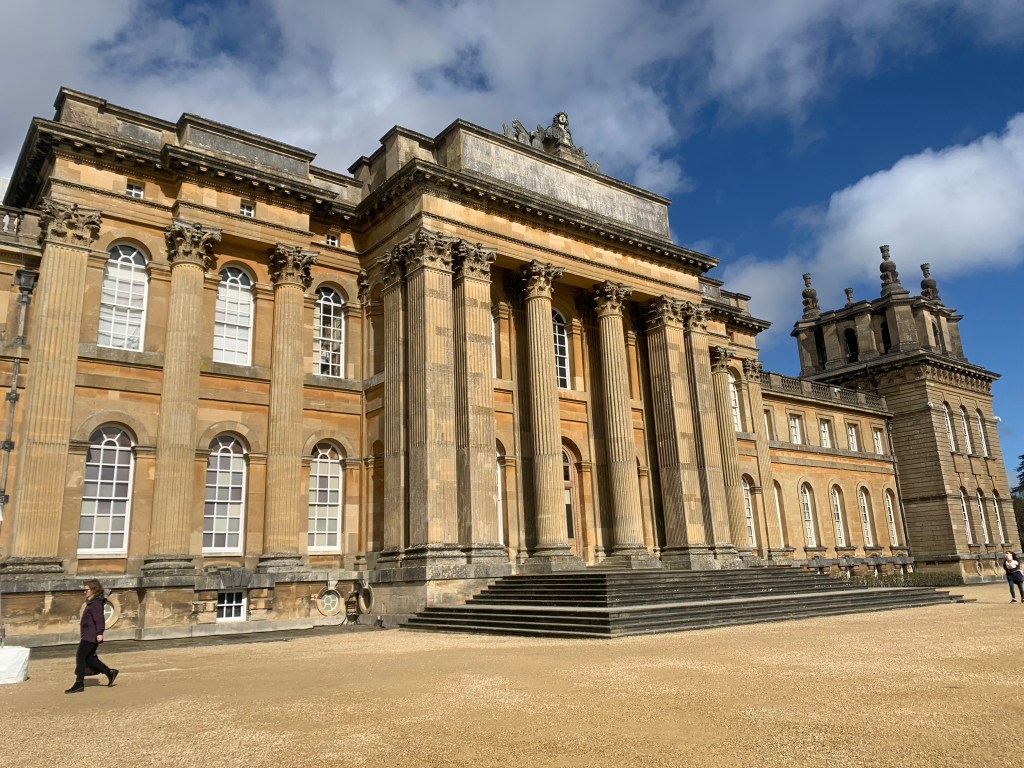
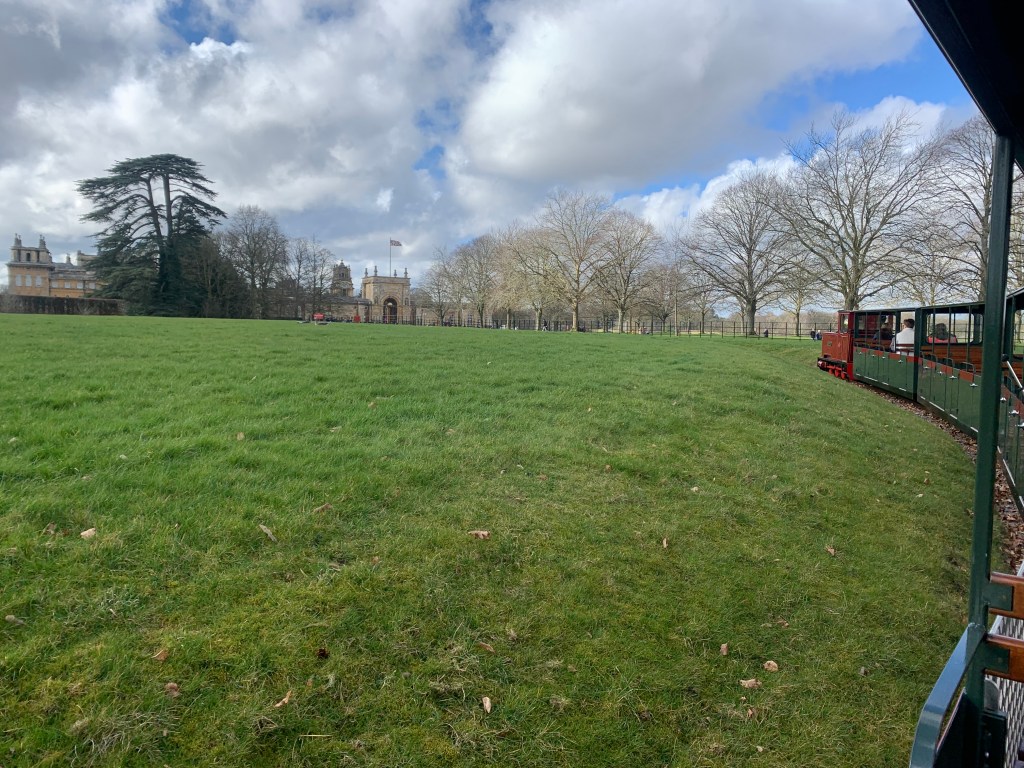
So, Is It Worth a Visit? Absolutely! As I mentioned we bought tickets just for the gardens, but we would happily pay the extra to see inside. The boys didn’t have a chance to get bored – the only thing we needed was a buggy as the walk around the grounds is longer than you think and their little legs got tired! I recommend walking the full loop, so heading to the water terraces on the West side of the Palace with stunning views. Then around to the South Lawn and past the Italian Garden on the East side, then all the way around to the Walled Garden, passing the Secret Garden en route. There are different routes you can take too so there is a lot of variation, including a path that takes you across the far side of the South Lawn that gives you an exquisite view of the South side of the Palace. Once through the Walled Garden (which is a lovely picnic spot) there is a playground with slides and swings, beyond is a huge adventure playground and nearby is a place to get some food and drink. All the way there were geese and ducks and secret hideouts and pathways to be found. We wanted to find the miniature train that runs from the Palace entrance to the Walled Garden. It took us a while to find as there weren’t any signs directing us to it, but we found it was through to the coach park and on the left. It’s £1 per grown-up and you can pay contactless. The train was a huge hit with the boys – it is only a short journey but its good fun and gets you back to the beginning after a long enough walk! A welcome helping hand!
We are very much looking forward to going again, and we will take a grandparent to watch Rory while we are inside nosing about! If you decide to go, then I hope you have a wonderful time. Thanks for reading our first instalment and keep a lookout for our next Is It Worth a Visit?
 Gilbert Tours